English
  Albanian

Many patients rightly ask, “Is a CT scan harmful?” The question mainly concerns the fact that CT uses radiation (X-rays) to create detailed images of internal organs and structures. The good news is that CT is not harmful when performed with a precise medical indication, at the right time and with modern equipment that optimises the radiation dose.
In this article you will find clear information: when a CT scan is recommended, how to minimise the risk, who should take particular care, and how to prepare for a safe examination.
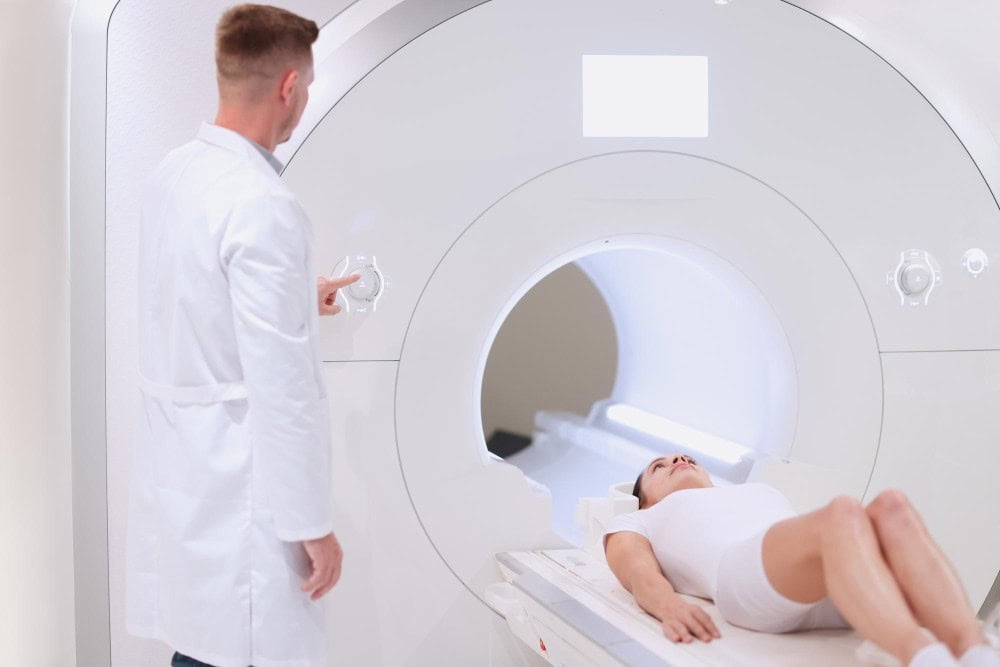
What is a CT (Computer Tomography) scanner and why is it used?
CT (Computed Tomography) is an imaging examination that produces highly detailed images of the body, offering details often not visible on plain X-rays. For this reason, CT is often used when a doctor needs a faster and more accurate diagnosis.
CT may be recommended, for example, in cases such as:
- assessment of traumas (e.g. accidents, falls)
- Suspected internal haemorrhage
- Severe abdominal pain
- assessment of the lungs, sinuses and head
- Assessment of the internal organs and blood vessels (depending on the protocol)
Why are people worried: is there a risk from radiation?
Yes, CT uses ionising radiation (like X-rays), so it is not an examination performed “just for fun” or without reason. However, in practice the risk is always assessed against the benefit: when a CT scan is necessary for diagnosis, the benefit outweighs the risk.
Doctors follow the principle: the less radiation, the better – but as much as is necessary for a clear image. This means that the dose is adjusted according to:
- the area being scanned
- the patient's age and body
- clinical emergency
- need for contrast (if required)
A CT scan is not harmful when there is a clear medical indication.
This is the key point: CT is not harmful when performed at the right time and for the right reason. Often, CT can:
- to speed up the diagnosis
- Help me choose the right treatment.
- Prevent complications
- Avoid unnecessary interventions
In urgent situations, CT can be decisive. If you have symptoms that require immediate assessment, contact the emergency!
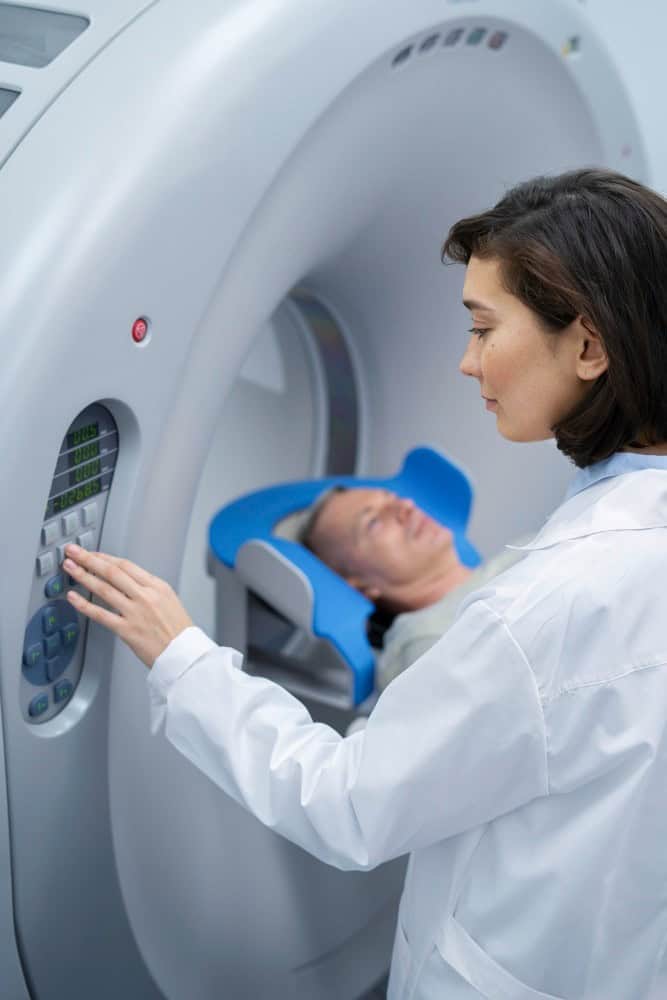
How does Family Hospital reduce radiation exposure?
✅ At Family Hospital, advanced equipment is used to significantly reduce the radiation dose, ensuring clear images and a safe examination.
This is achieved through:
- patient-optimised protocols
- modern technologies that enhance image quality with a lower dose
- continuous monitoring of the scanning parameters
Who should take particular care?
There are some groups in which the doctor assesses the necessity of a CT scan with even greater care:
1) Pregnant women
During pregnancy, radiation is avoided whenever possible. If the examination is necessary, the safest protocols and alternatives are chosen wherever feasible.
2) Children
Children are more sensitive to radiation than adults, so paediatric protocols are used and the examination is carried out only when there is a strong indication.
3) People who have had many X-ray/CT scans
If you have a history of frequent examinations, inform your doctor. He will assess whether there are any alternatives or if a CT scan is still the best option.
CT scans or other examinations: are there alternatives?
In some cases, the doctor may choose other non-radiation methods, depending on the problem:
- Echo (ultrasound)
- Magnetic resonance imaging (MRI)
For example, in the assessment of blood vessels, methods such as echo-Doppler are often used.
Learn more: Echo Doppler of the cervical vessels.
However, there are situations where CT is the fastest and most accurate method, especially in the emergency department.
Do you feel anything during the CT scan? Is it painful?
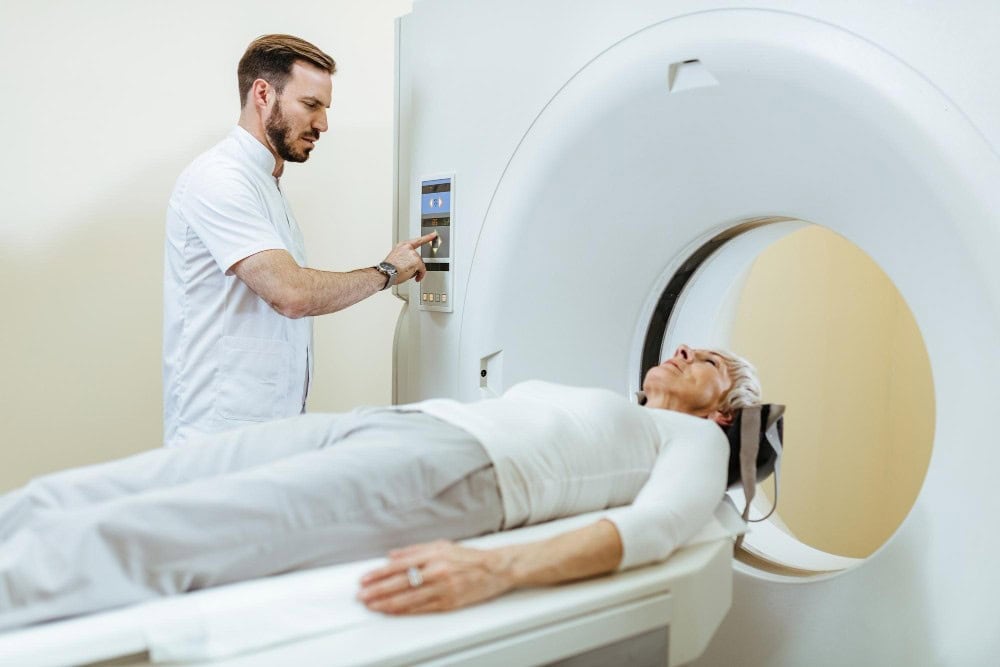
CT is a quick and painless examination. You lie on a bed that moves gradually through the scanner. If contrast is used, you may feel:
- a warm sensation for a few seconds
- a slight metallic taste in the mouth
These are common and usually pass quickly.
How to prepare for a safer and more accurate CT scan
Some simple tips that help:
- Bring your doctor's referral and any previous test results or examinations with you.
- Inform the staff if you are pregnant, suspect you may be pregnant, or have any allergies.
- If contrast medium is to be used, you may be asked not to eat for several hours (as instructed).
For detailed instructions, read: What you need to do before having a CT scan
When should you consult your doctor?
If you have symptoms that won't settle, severe pain, a general feeling of being unwell, or you have a clear recommendation for a CT scan, don't delay. In many cases, early diagnosis is crucial.
For a broader approach to prevention and controls, you can read: Why you should have a check-up regularly.
Summary: Is CT harmful?
CT is not harmful when performed with a precise medical indication and modern equipment. At Family Hospital, advanced machines are used that significantly reduce the radiation dose, ensuring clear images and a safe examination.
A culture of caring…!
Contact us (Family Hospital)
📞 Phone: +355 44 50 50 55
📞 Cell: +355 69 60 60 620
📍 Address: Rr. Kongresi i Manastirit, Tirana
🌐 Web: www.ifmc.al
For more information or to book an appointment, Contact us