English
  Albanian

Measles is one of the most contagious infectious diseases that mainly affects unvaccinated children, but it can also occur in adults. Although in many cases it passes without serious complications, measles requires immediate medical attention, as it can lead to complications such as pneumonia, otitis media, or brain inflammation (encephalitis).
IN Family Hospital, pediatricians and infectious disease specialists provide specialized care for the diagnosis, monitoring, and treatment of children with measles, ensuring safe and professional care. This article will help you recognize the first signs of measles, treatment methods, and tips to follow to protect your child.

What is measles?
Measles is a viral infection caused by virus Morbilliviruses, which spreads through air droplets when an infected person coughs or sneezes. This virus is extremely sticky – almost any person who is not vaccinated can become infected if exposed to it. Measles initially affects respiratory system, then spreads throughout the body and appears with characteristic skin rash.
How is measles spread?
Measles is transmitted through:
- Airborne (through the sneezing or coughing of an infected person)
- Direct contact with nasal or oral secretions
- Surfaces contaminated with the virus (where it can survive for up to 2 hours)
A person with measles can be contagious up to 4 days before and 4 days after the rash appears.
The first signs of measles in children
Symptoms usually appear 10–14 days after infection. At first, they may be confused with a common flu, but as the days pass they become clearer.
First stage (initial symptoms)
- High temperature (38.5–40°C)
- Dry and persistent cough
- Sneezing and runny nose
- Red eyes and sensitivity to light (conjunctivitis)
- Weakness and lack of appetite
Second stage (characteristic signs)
After 2–3 days they appear small white spots in the mouth (Koplik spots) – a typical sign of measles that helps in diagnosis.
Third stage (measles rash)
Around the fourth day, a rash appears on the skin:
- It starts behind the ears and spreads to the face, body, and limbs.
- Lasts about 5–7 days
- It is usually accompanied by high fever and general fatigue.
After the skin rash passes, the temperature drops and the patient begins to feel better.

How is measles diagnosed?
The diagnosis is made by pediatrician OR infectious disease specialist, based on symptoms and laboratory tests.
1. Clinical assessment
The doctor identifies characteristic signs such as:
- Rashes on the body
- Koplik spots on the oral mucosa
- History of contact with infected persons
2. Laboratory tests
- Blood test (anti-measles IgM and IgG) for confirmation of the virus
- PCR (Polymerase Chain Reaction) for accurate virus identification
- In cases with complications, it may also be required chest x-ray or other additional analyses
IN Family Hospital, these examinations are carried out with modern laboratory technology, providing fast and accurate results.
Treatment of measles in children
There is no one. specific antiviral treatment for measles.
Treatment focuses on symptom relief, prevention of complications AND maintaining body hydration.
1. Home care
- Make sure the child get enough rest.
- Make lots of fluids (water, warm teas, soup) to avoid dehydration.
- Keep your room. airy and dimly lit, as the eyes are very sensitive.
- Reduce the temperature with paracetamol or ibuprofen, only as directed by a doctor.
- Avoid contact with other people for at least 4 days after the appearance of the skin rash.
2. Supportive treatment in the hospital
In cases where the child presents with a high fever, difficulty breathing or signs of complications, medical attention may be required. hospital treatment. In Family Hospital, children are continuously monitored and receive:
- Intravenous hydration therapy (serums)
- Vitamin A supplementation, which helps strengthen the immune system
- Antibiotics, only if secondary bacterial infections occur (such as pneumonia or otitis)
- Oxygen therapy, in case of respiratory difficulties
Possible complications of measles
In most cases, children recover completely, but measles can cause: serious complications, especially in those with weak immune systems.
The most common complications are:
- Otitis media (ear infection)
- Bronchopneumonia
- Laryngitis and tracheobronchitis
- Diarrhea and dehydration
- Encephalitis (brain inflammation) – very rare, but potentially fatal
For this reason, immediate contact with the pediatrician It is essential as soon as the first symptoms appear.
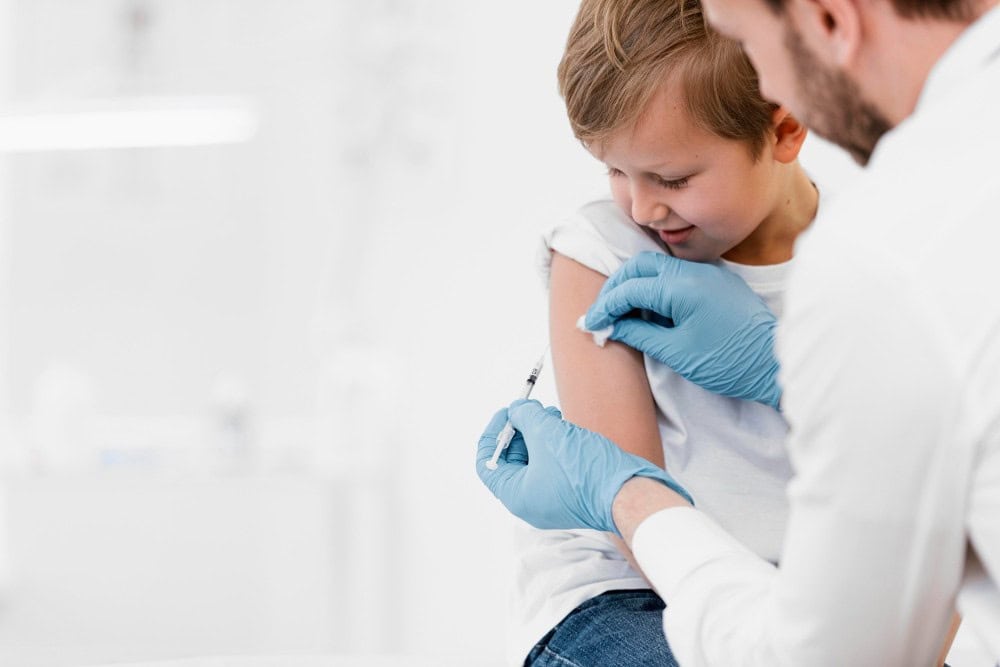
Prevention: Vaccination is the strongest shield
The best way to prevent measles is to MMR vaccination (measles, mumps, rubella). This vaccination is part of national vaccination calendar and it is 100% safe and effective.
According to medical recommendations:
- First dose: at age 12–15 months
- Second dose: at age 4–6 years old
The vaccine helps in strengthening immunity AND preventing the spread of the virus in the community.
IN Family Hospital, parents can take advice from pediatricians and infectious disease specialists about vaccination, side effects and post-vaccination care.
Important advice from Family Hospital doctors
- Don't ignore a high fever. – if the temperature is above 39°C and does not decrease with medication, seek medical help.
- Avoid strong light. – measles affects eye sensitivity, so keep environments softly lit.
- Clean your nose and mouth carefully – use soft gauze and saline solution to clean mucous membranes.
- Do not use antibiotics without a doctor's recommendation. – measles is a virus, not a bacterium.
- Keep the child at complete rest. – fatigue can delay healing.
- Ensure high hygiene at home – clean the toys and objects the child uses.
- Don't send him to school or kindergarten. up to 7 days after the rash disappears.
How to care after recovery
Even after the symptoms have passed, The child's immune system remains susceptible for several weeks.. For this reason, doctors Family Hospital recommend:
- Food rich in protein, fruits and vegetables
- Enough water and rest
- Check-up after 2 weeks to ensure full recovery
- Avoiding contact with sick people

When you should go to the hospital immediately
Seek medical help immediately if the child:
- there are difficulty breathing
- there are convulsions (tremors)
- Does not react normally or is excessively sleepy
- there are very high temperature that does not drop
- there are skin rash that spreads rapidly
IN Family Hospital, pediatricians and emergency personnel are available 24/7 to provide immediate help and specialized care for children with measles or similar symptoms.
cONcluSiON
Measles is a disease that can be easily prevented by vaccination AND is successfully treated when diagnosed early. In Family Hospital, we believe that information, personalized care and timely intervention are the key to a safe and speedy recovery.
If your child shows symptoms of measles, don't wait for them to get worse. Book a visit to Family Hospital pediatricians immediately. and make sure your child receives the care they deserve — with professionalism, love, and dedication.