English
  Albanian

Many women encounter the term "ovarian cyst" at some point in their lives and often feel anxious upon hearing this diagnosis. However, in most cases, Ovarian cysts are common, benign, and go away on their own. without the need for surgical treatment. It is important that they are detected and monitored in time to avoid possible complications.
IN Family Hospital, gynecology specialists use the most advanced diagnostic technology to accurately distinguish the type of cyst and determine the most appropriate treatment for each patient. This article will help you better understand what ovarian cysts are, how they are diagnosed, what are the signs that should be taken seriously, and what are the modern treatment options.
What are ovarian cysts?
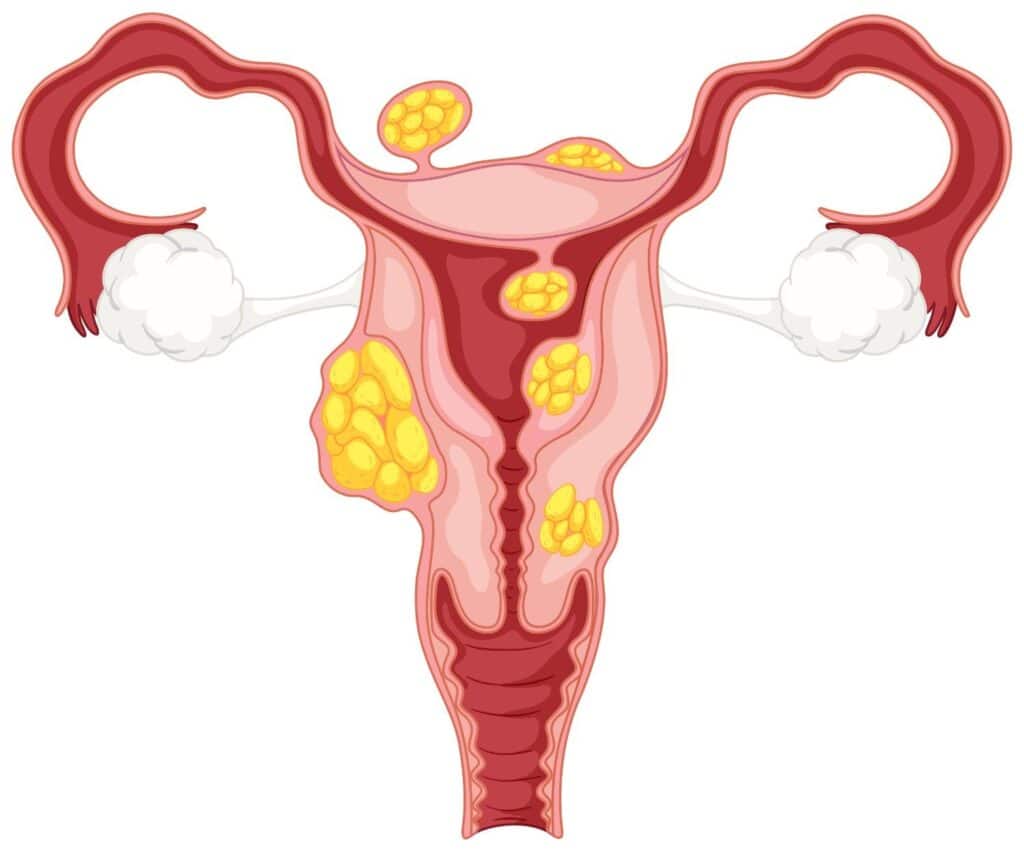
A ovarian cyst is a fluid-filled sac that forms on or inside one of the ovaries. The ovaries are the organs that produce eggs and the female hormones – estrogen and progesterone.
Cysts can be functional (natural) OR pathological (related to hormonal disorders or specific diseases). The distinction between them is essential in deciding whether observation alone or medical treatment is required.
The most common types of ovarian cysts
1. Functional cysts
These are the most common and appear during the menstrual cycle as part of the normal ovulation process. They usually disappear on their own within a few weeks.
- Follicular cysts: They form when the ovary does not release an egg during ovulation and fluid accumulates in the follicle.
- Luteal cysts: They appear after ovulation, when the corpus luteum fills with fluid instead of breaking down.
2. Pathological cysts
These cysts require more careful attention, as they can be associated with diseases such as: endometriosis, polycystic ovary syndrome (PCOS) or with benign or malignant tumor mass.
- Endometriomas (endometriosis cysts): They contain old blood and are associated with pain during menstruation.
- Dermoid cysts: They contain various tissues (hair, fat) and are usually benign, but require surgical removal.
- Cystadenoma cysts: They are filled with fluid or mucous material and can grow to large sizes.
What are the signs and symptoms of ovarian cysts?
In many cases, cysts they do not show symptoms and are discovered incidentally during a routine gynecological ultrasound. However, some women experience:
- Mild pain or a feeling of pressure in the lower abdomen
- Changes in menstrual cycle (delay, unusual bleeding)
- Abdominal bloating or discomfort
- Pain during sexual intercourse
- Increased need to urinate
- Nausea or general feeling of fatigue
In more severe cases, such as cyst rupture (rupture) OR twisting of the ovary (ovarian torsion), symptoms can be severe and require immediate intervention:
- Sudden and very severe abdominal pain
- Fever, nausea, or vomiting
- Fainting or feeling of loss of consciousness
If any of these symptoms appear, you should go to the emergency room immediately, as these are situations that could endanger your life.

Diagnosing ovarian cysts
IN Family Hospital, the diagnosis is carried out with precision and care, combining modern technology with the experience of gynecologists.
1. Transvaginal ultrasound
This is the most important examination to assess the size, shape, and contents of the cyst. Ultrasound helps to distinguish whether it is a simple or complex cyst.
2. Blood tests
They include the measurement of hormones (FSH, LH, estradiol, progesterone) as well as tumor markers such as ca 125, which help to rule out any malignant process.
3. Magnetic resonance imaging (MRI)
In certain cases, it is used to confirm the nature of the cyst when ultrasound does not provide sufficient information.
4. Periodic control
The doctor may recommend monitoring every 4–6 weeks to see if the cyst has shrunk, is stable, or has grown over time.

Treatment of ovarian cysts
The type of treatment depends on several factors:
- Cyst size
- Patient's age
- Symptoms
- Type of cyst (functional or pathological)
- Desire for pregnancy in the future
1. Observation (active observation)
In most cases of functional cysts, no specific treatment needed. The doctor may recommend periodic ultrasound to monitor whether the cyst disappears on its own. A healthy lifestyle and reduction of hormonal stress.
2. Drug treatment
If the cysts are recurrent or cause pain, the following may be used:
- Hormonal contraceptives, which help prevent the formation of new cysts
- Hormone-regulating medications in cases of PCOS
- Mild analgesics for pain relief
This treatment aims hormonal stabilization and symptom relief, but it does not remove existing cysts.
3. Laparoscopic surgery
When cysts are large (over 6 cm), symptomatic, or there is suspicion of a pathological nature, it is recommended surgical removal.
IN Family Hospital, gynecological surgeons perform high-precision laparoscopy, using very small incisions that:
- Minimize pain after surgery
- Shorten recovery time
- Reduce the likelihood of complications
- Preserve fertility (when possible)
In rare and complicated cases, a more extensive intervention may be necessary – laparotomy, but this is less common thanks to modern technology.
Cysts and fertility
One of the biggest concerns for women is whether cysts can affect their fertility. their ability to get pregnant. In most cases, functional cysts do not affect fertility and disappear by themselves.
However, some types of cysts, such as endometriomas or those related to polycystic ovary syndrome, can affect ovulation AND egg quality.
IN Family Hospital, doctors offer personalized fertility assessment, with the most modern methods, to help women who want to plan pregnancy after cyst treatment.
Possible complications
If not treated in time, cysts can cause:
- Ovarian torsion – an emergency that can damage ovarian tissue
- Cyst rupture – which causes internal bleeding and severe pain
- Infections
- Difficulty in pregnancy or hormonal disorders
For this reason, Regular gynecological check-ups are essential., even in the absence of symptoms!
How to care after treatment
After treatment or surgical intervention, your doctor will prepare an individual care plan, which may include:
- Use of hormonal drugs for stabilization
- Periodic ultrasound check-up
- Monitoring for signs of symptom recurrence
- Balanced diet and moderate physical activity
IN Family Hospital, aftercare is as important as the procedure itself. Our team follows up with each patient to ensure a complete and complication-free recovery.
How to‘'it prevent ovarian cysts
Although there is no surefire way to prevent cysts from forming, some steps can help:
- Regular gynecological checkups
- Stress management and maintaining ideal body weight
- Use of hormonal contraceptives only on doctor's advice
- Diet rich in fruits, vegetables and healthy fatty acids
The best prevention is early diagnosis and periodic check-ups, which can avoid any serious complications.
When to seek medical help
Consult a gynecologist immediately if you experience:
- Severe or recurring abdominal pain
- Changes in the menstrual cycle
- Constant abdominal bloating
- Difficulty urinating or defecating
- Unexplained fever or nausea
IN Family Hospital, you can perform modern ultrasound, hormonal analysis and gynecological consultation without delay. Our care aims not only at treatment, but also preventing future reproductive problems.
Ovarian cysts are a common condition, but one that requires professional attention and constant monitoring. Thanks to advances in diagnosis and minimally invasive treatment, most women are treated successfully and quickly return to their daily lives.
IN Family Hospital, we believe that Health begins with prevention, personalized care and ongoing support.. If you have symptoms or suspicions of an ovarian cyst, Don't neglect yourself – book a consultation with our gynecologists today. and benefit from experience and technology that guarantee safety and excellent results.