English
  Albanian

Prostate problems are very common in men, especially after the age of 50. The prostate is a small gland, but with an important function for the health of the urinary and reproductive systems. Over the years, it often enlarges, bringing changes that affect the quality of life. In this article, we will discuss everything you need to know about prostate surgery.
What is the prostate and why does it cause problems?
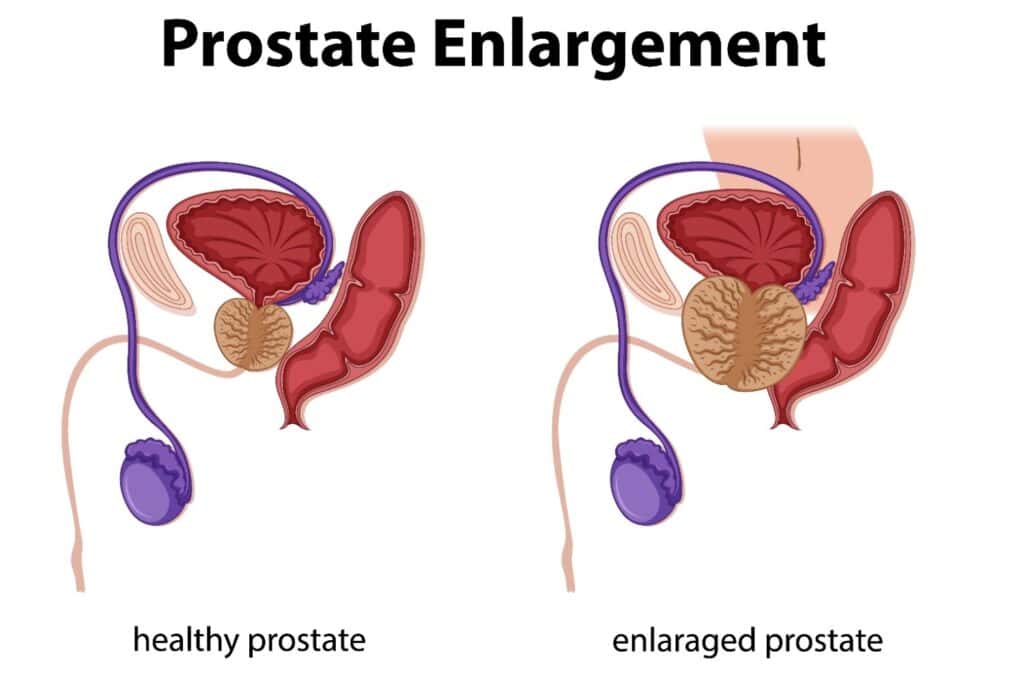
The prostate is a small gland located below the bladder and around the urethra. Its main function is to produce fluid that nourishes and transports sperm.
With age, the prostate often enlarges, a condition known as benign prostatic hyperplasia (BPH). This condition is not cancer, but it puts pressure on the urethra and makes it difficult to pass urine.
In addition to benign enlargement, the prostate can also be affected by chronic infections or prostate cancer, which is one of the most common forms of cancer in men.
Symptoms that indicate you have prostate problems
Prostate problems often present with urinary symptoms. Men notice that they urinate more frequently, especially at night, or have difficulty starting to urinate. The urine stream may be weaker and often creates the feeling that the bladder is not emptying completely.
In some cases, lower abdominal pain, frequent urinary tract infections, or even blood in the urine occur. When symptoms become persistent and do not improve with medication, surgery is often the only safe option.
Non-surgical treatments
Many cases of prostate enlargement can be managed with medications that relax the prostate muscles or reduce its size. In cases of infection, antibiotics and anti-inflammatory treatments are used.
However, when symptoms are severe, when medications are ineffective, or when complications occur, the doctor recommends surgical intervention.

When is prostate surgery needed?
Prostate surgery is not immediately recommended for every patient, but there are some situations where it is necessary.
A common cause is benign prostatic hyperplasia (BPH) that is not controlled by medication. If the patient has severe difficulty urinating, if urine remains in the bladder after each urination, or if the patient experiences frequent urinary tract infections, surgery is the best option.
Surgery is also necessary when prostate enlargement causes damage to the bladder or kidneys due to urinary blockage.
Another serious cause is prostate cancer. In these cases, surgery may be part of a combination treatment with radiotherapy or hormonal therapy. Complete or partial removal of the prostate is often the only way to stop the spread of the disease.
Types of prostate surgery
Prostate surgery can be performed in several forms, depending on the problem and the patient's condition.
One of the most commonly used methods is transurethral resection of the prostate (TURP). This surgery is performed using an instrument inserted through the urethra, without the need for an incision in the abdomen. TURP is effective in reducing the symptoms of benign prostatic hyperplasia.
Another method is open prostatectomy, which is done when the prostate is too large and cannot be treated with TURP.
In recent years, laser surgery and laparoscopic or robotic prostatectomy have been increasingly used, which are less invasive, cause less bleeding, and offer faster recovery.
| Type of Surgery | Description | Advantages |
| Transurethral Resection of the Prostate (TURP) | Removal of the internal part of the prostate using an instrument inserted through the urethra, without making an incision in the abdomen. | Effective for benign enlargement, no incisions, quick recovery. |
| Open Prostatectomy | It is performed through an incision in the abdomen, especially when the prostate is very large. | Suitable for advanced cases. |
| Laser Surgery | It uses lasers to melt or remove prostate tissue. | Less invasive, less bleeding. |
| Laparoscopic/Robotic Prostatectomy | It is performed with small incisions and manually or robotically controlled instruments. | Quick recovery, minimal trauma. |

Benefits of prostate surgery
Surgery helps the patient restore normal urinary function. After surgery, most patients urinate more freely, have less pain, and no longer need to wake up as often at night.
Surgery also prevents serious complications such as bladder damage, bladder stones, or recurrent infections. In cases of cancer, surgery is often the only treatment that offers hope for a long-term cure.
Risks and side effects
Every surgical procedure has its own risks. After prostate surgery, some patients may experience bleeding, infections, or temporary difficulty urinating. In some cases, long-term effects such as urinary control problems or erection problems may also occur.
Thanks to the modern techniques used in Family Hospital, these complications are much rarer and often manageable with medical treatment and rehabilitation.
Recovery after surgery
Recovery time varies depending on the type of surgery. After an open prostatectomy, the hospital stay is longer and recovery can take several weeks.
While after laser or laparoscopic surgeries, patients return to daily activities more quickly.
The patient should carefully follow the doctor's instructions, avoid heavy lifting, and drink plenty of fluids to aid healing. Regular check-ups are necessary to monitor the condition and ensure that the prostate is no longer causing problems.

Frequently Asked Questions (FAQ)
When should I consult a urologist?
If you have persistent difficulty urinating, frequent urination at night, blood in your urine, or recurring infections, it's time to visit a urologist.
Is prostate surgery always necessary?
No, most patients are initially treated with medication. Surgery is only recommended when symptoms are severe or complications occur.
How long do you have to stay in the hospital after prostate surgery?
This depends on the type of procedure. After laser or laparoscopic surgery, 1–3 days are often sufficient, while after open prostatectomy, longer may be needed.
Is there a certain age for prostate surgery?
No, but it is often recommended for men over 50. The patient's overall health is more important than age.
Does surgery help with prostate cancer?
Yes, radical prostatectomy is one of the main treatments for early-stage prostate cancer.
How long does full recovery take?
Partial recovery takes several weeks, while full recovery can take up to several months, depending on the intervention and the patient's condition.
Are there alternatives to surgery?
In some cases, minimal techniques such as laser ablation are used, but they are not suitable for every patient.
Is prostate surgery painful?
Thanks to anesthesia and modern techniques, patients do not feel pain during the surgery. After it, the pain is usually mild and managed with medication.